


BXNK offers a regulated settlement infrastructure with fixed currency liquidity pools and an atomic settlement protocol for real-time, compliant value transfers between fiat and digital assets.
Explore Advantages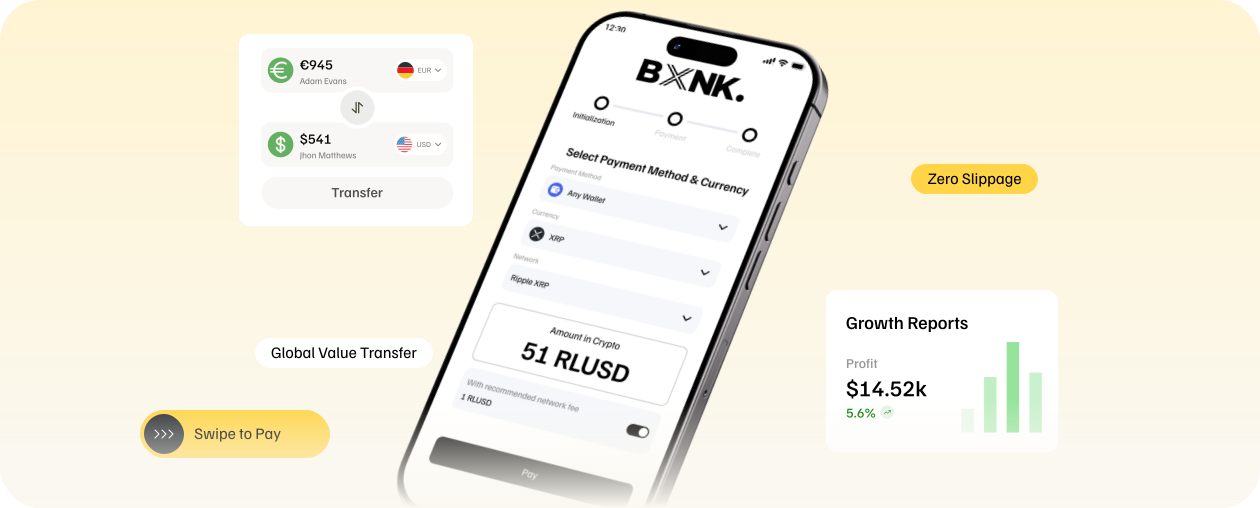








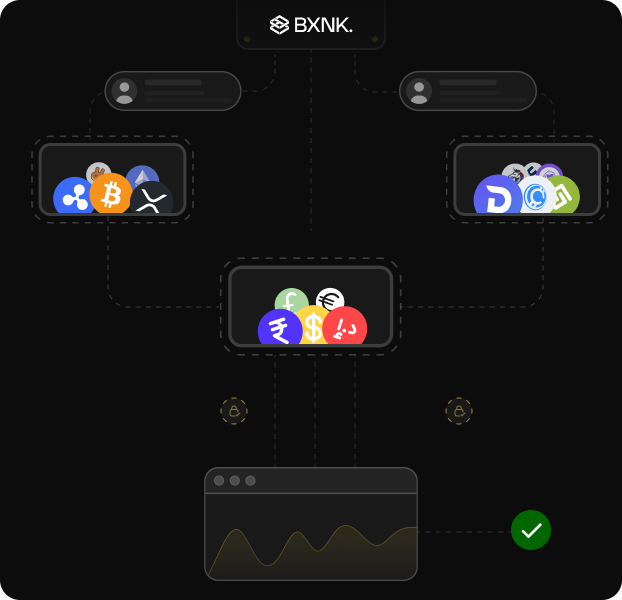
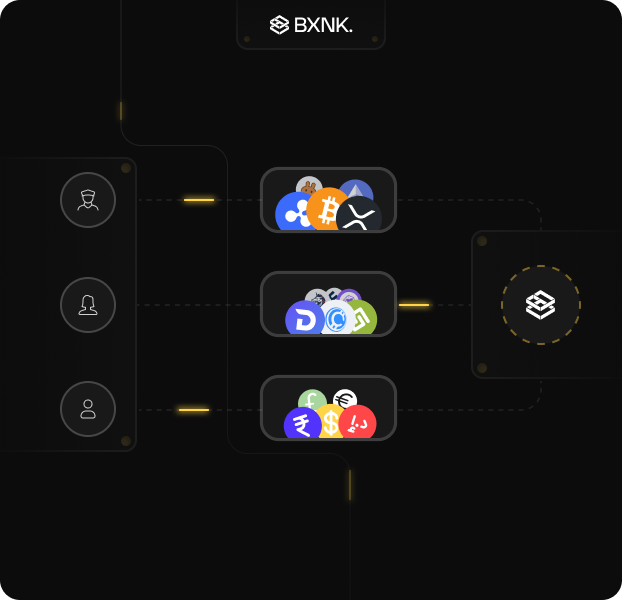
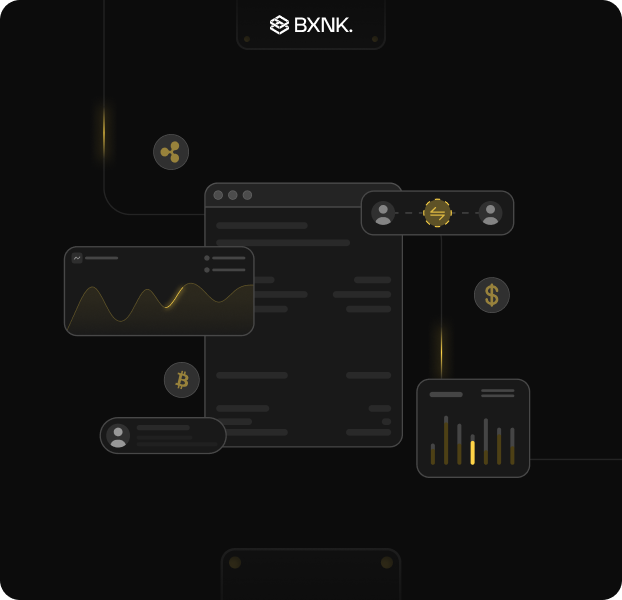
BXNK maintains a dedicated liquidity pool for each supported fiat currency or digital asset. Funds within these pools remain in their native denomination and are not converted or netted against other currencies. This ensures that value remains stable and traceable, regardless of market conditions or corridor. The result is predictable liquidity management, simplified accounting treatment, and a stable foundation for real-time settlement across jurisdictions.
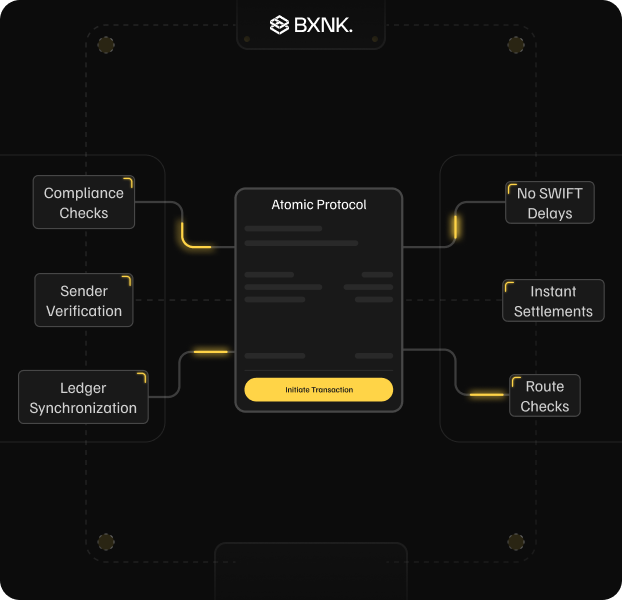
Settlement is executed through BXNK’s atomic protocol, which synchronizes ledger updates across currency pools. When a transaction is initiated, compliance checks validate the sender, recipient, and route. Once verified, a settlement instruction is issued, and corresponding funds are released from the destination pool instantly. This removes reliance on SWIFT timelines, correspondent banking processes, and delayed reconciliation workflows, allowing transactions to finalize in real time.
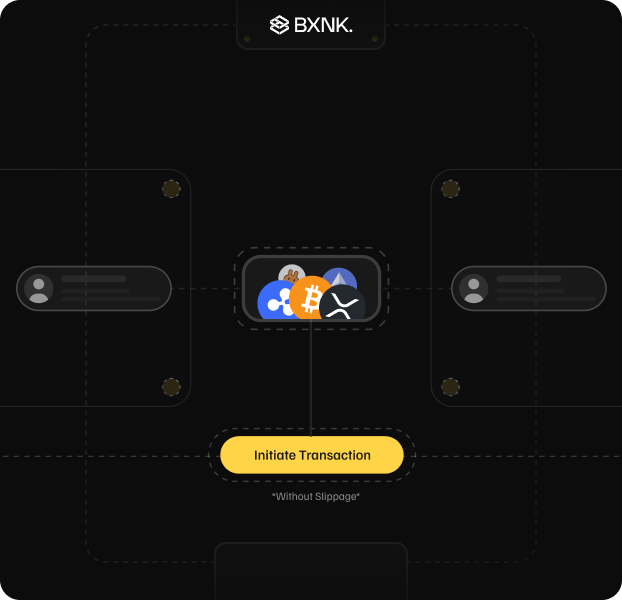
Because settlement occurs between fixed pools rather than through conversion or exchange mechanisms, the value transferred remains constant throughout the transaction lifecycle. There is no slippage, no FX exposure, and no spread-based variation between initiation and final settlement. Institutions can move funds globally with the assurance that received balances will match the expected settlement amount, improving treasury forecasting and operational stability.
Each partner, merchant, or institution operates using dedicated subaccounts within the relevant currency pools. Funds are never commingled, ensuring clear attribution of ownership and movement. This structure simplifies reporting, facilitates straightforward reconciliation, and maintains transparency at every stage of the settlement process. It also provides a clear audit trail aligned with internal controls and external regulatory requirements.
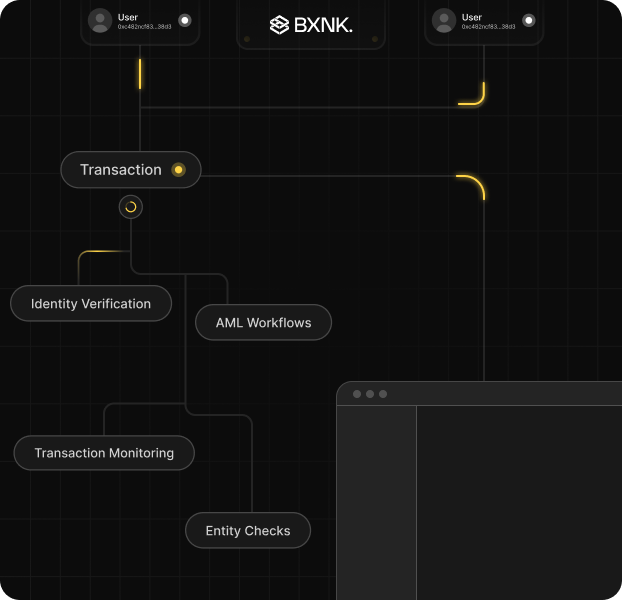
Compliance enforcement is layered directly into the settlement process rather than added after the fact. Identity verification, entity checks, AML workflows, and continuous transaction monitoring occur automatically before settlement is completed. This ensures that every transaction meets regulatory expectations without introducing operational delay. The system remains aligned with evolving regional compliance standards across jurisdictions.
The platform is architected to support expansion into new currencies, geographies, and asset classes without reconfiguring the core settlement logic. Additional pools and corridors can be introduced as needed, maintaining the same execution flow and compliance oversight. This modularity enables institutions to grow settlement networks progressively while retaining operational consistency and risk controls.
.svg)
BXNK предоставляет полноценную финансовую платформу, которая делает глобальные платежи мгновенными, безграничными и совместимыми. Благодаря нашему атомному протоколу и пулам ликвидности в фиксированной валюте мы предоставляем учреждениям, поставщикам платежных услуг и продавцам возможность работать по всему миру без задержек, проскальзывания валютных курсов или устаревших банковских ограничений.
Lorem Ipsum — это просто фиктивный текст из индустрии печати и набора текста. Lorem Ipsum является стандартным фиктивным текстом в индустрии еще с 1500-х годов.

Управляйте банком Ведущая финансовая платформа, обеспечивающая гибкие, безграничные и совместимые международные платежигибкие, безграничные и соответствующие законодательству. Благодаря нашему атомному протоколу и наборам стабильных монет, мы предоставляем организациям, поставщикам платежных услуг и продавцам возможностьработать по всему миру без задержек, просрочек платежей или сталкиваться с банковскими ограничениями.
Lorem Ipsum — это просто фиктивный текст из индустрии печати и набора текста. Lorem Ipsum является стандартным фиктивным текстом в индустрии еще с 1500-х годов.